
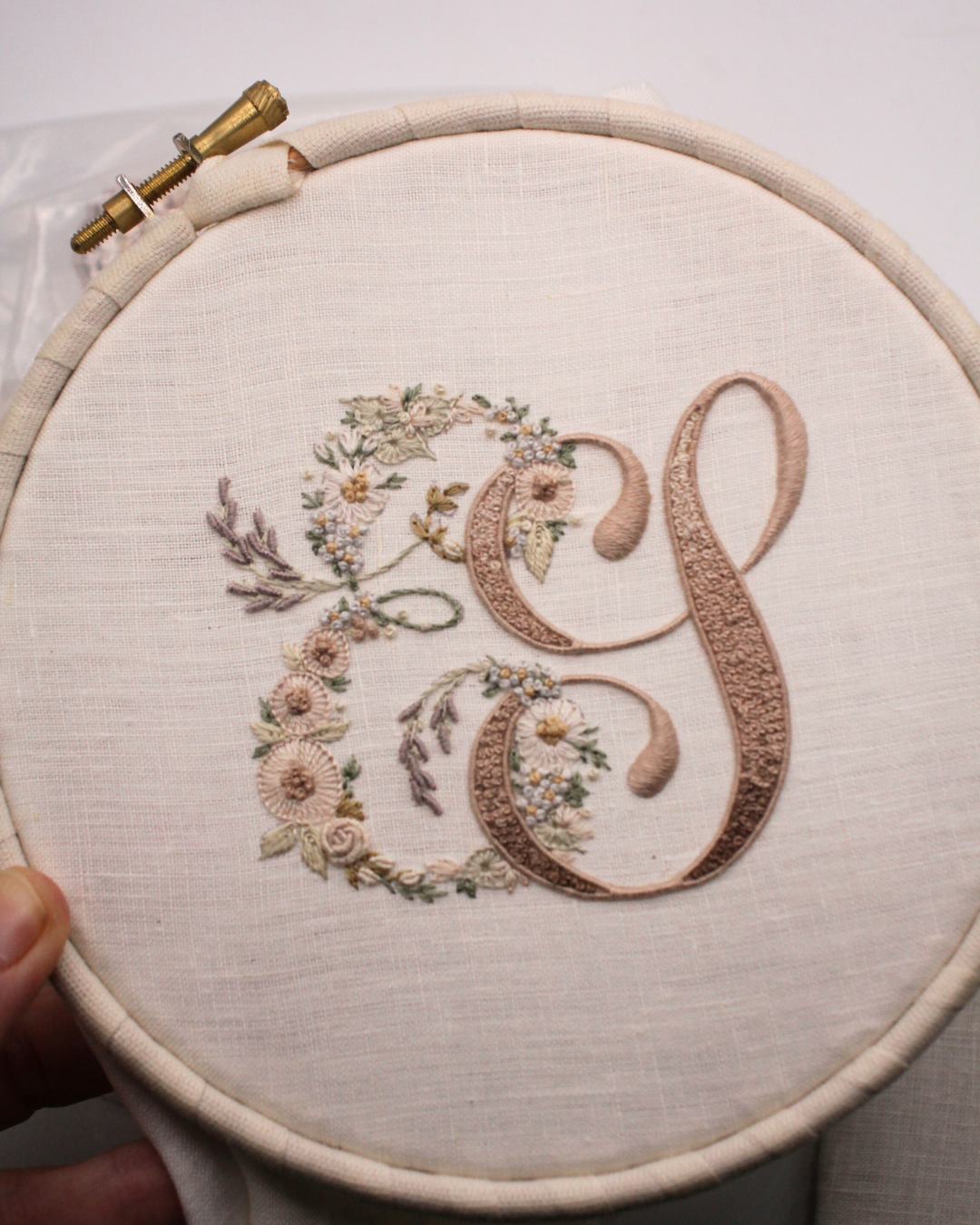
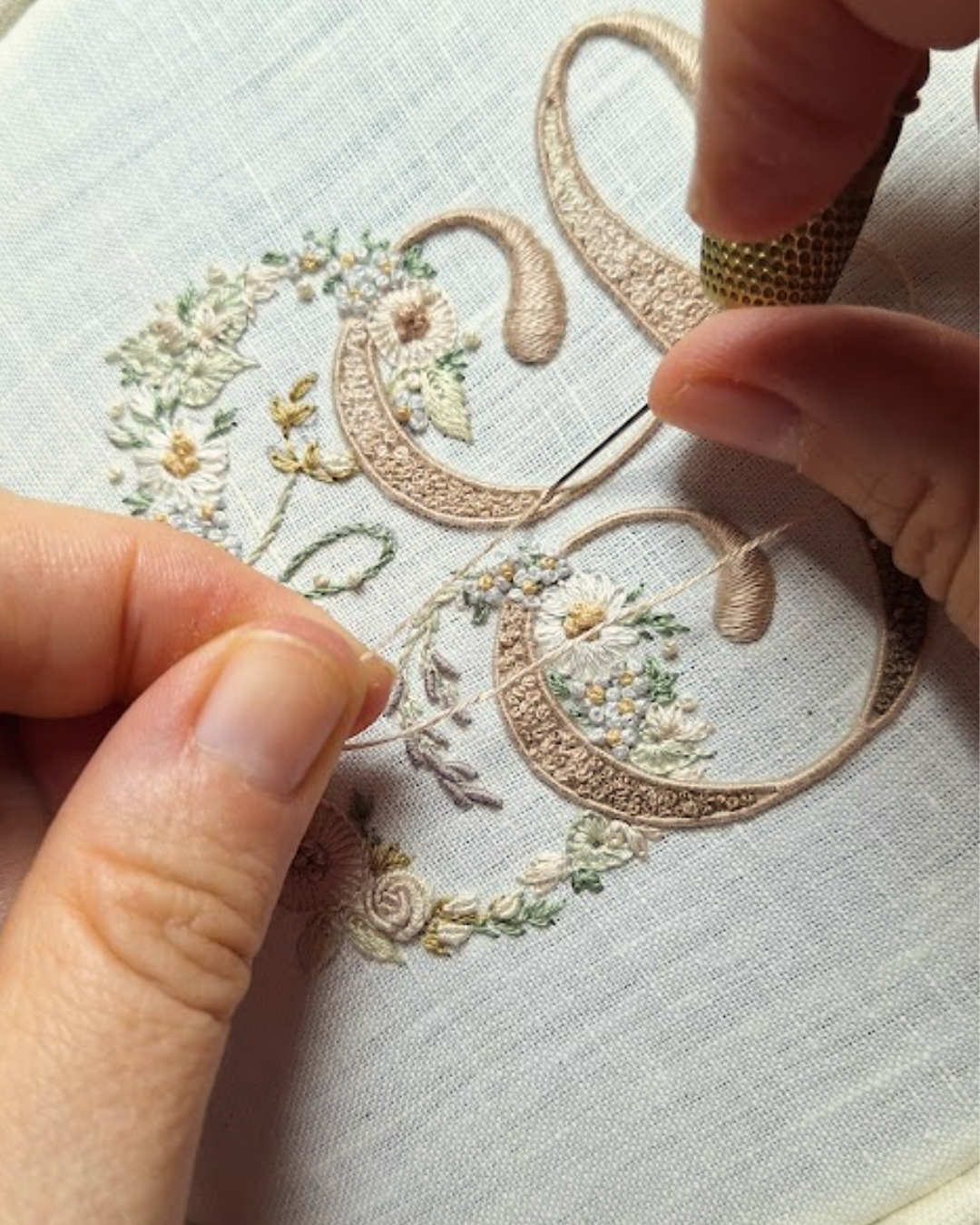
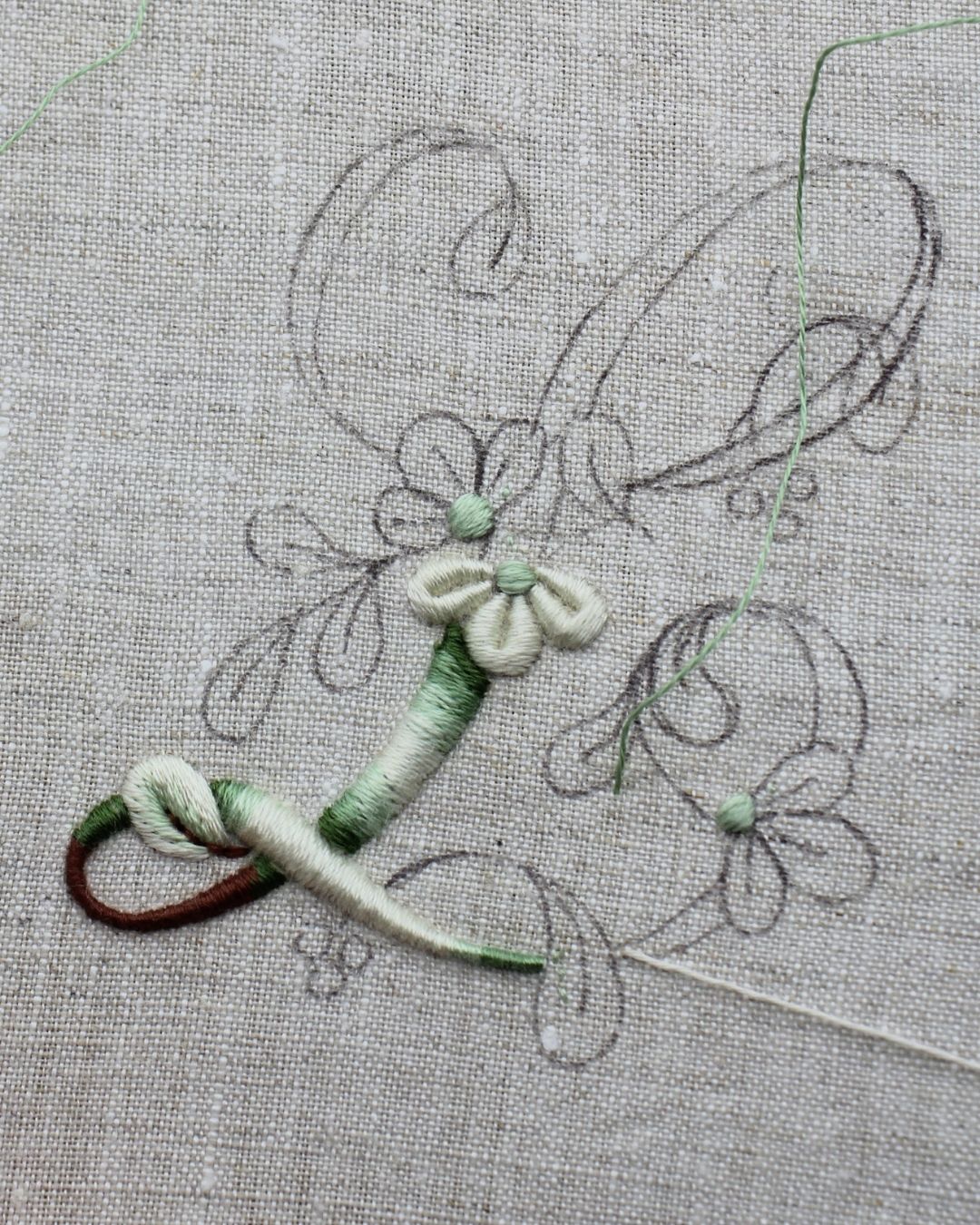
DMC 842 won. However, I only had mouliné thread, not No. 25 embroidery cotton. I decided not to go looking for it and to embroider the whole letter using only mouliné thread. I prepared two threads and, in the thicker areas that I would embroider with satin stitch, I worked two layers of embroidered padding. For the guide thread, I calculated an average of 7 threads, but I did the covering with a single thread: the advantage is that it is easier to turn the stitches, the disadvantage is that it takes much longer and I fear it will wear out sooner. But time will tell, and I needed tangible proof.
It had been since the publication of The ABC of Padded Stitch that I had returned to padded figures. Such was the appeal of the book that I found myself photographing every step, thinking I would write a super-detailed story with references to the pages of the manual. But as I leafed through the photos today, I realised that I would have had to rewrite it completely! I will do so for the full stitch course, which it is now time to start recording…
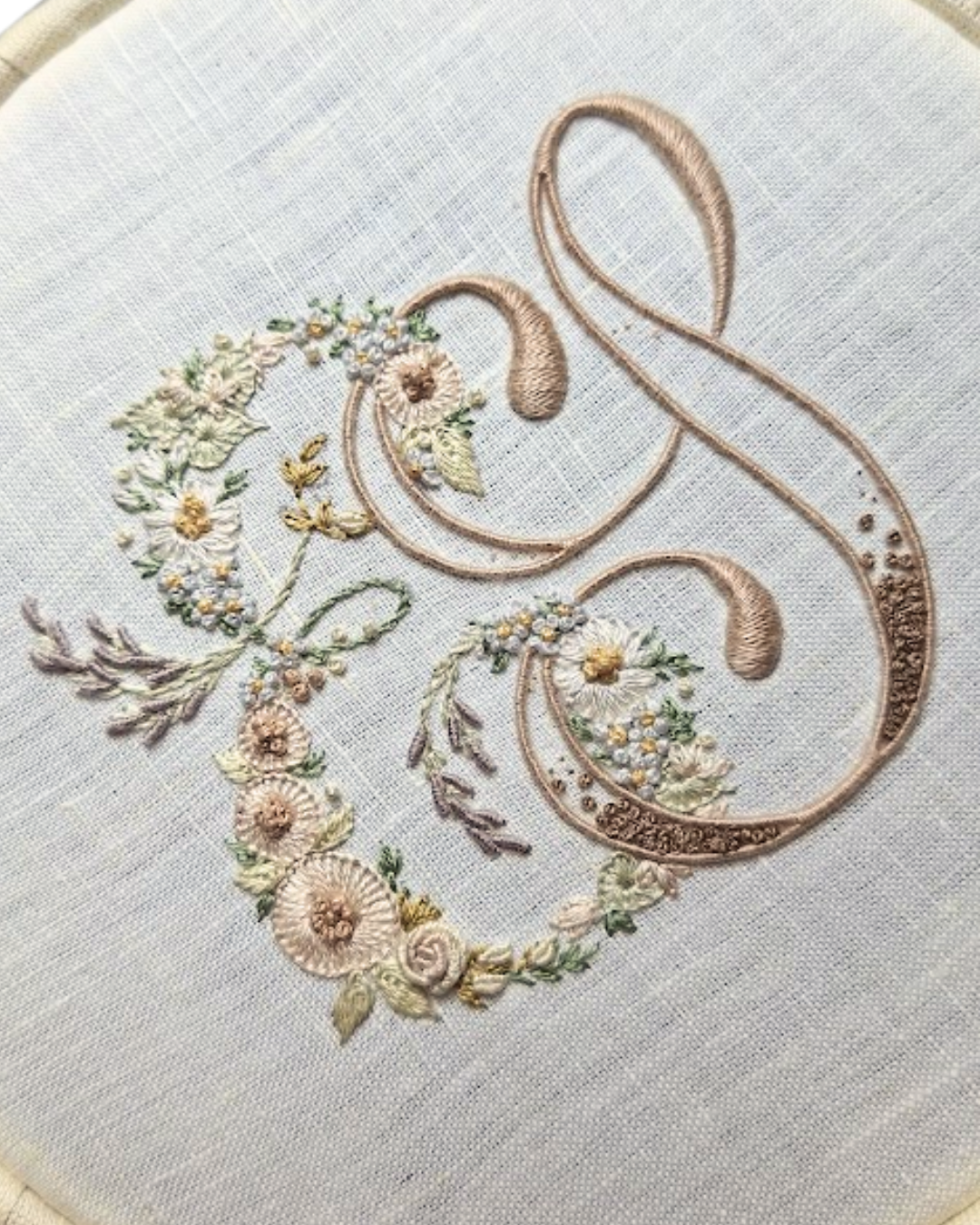
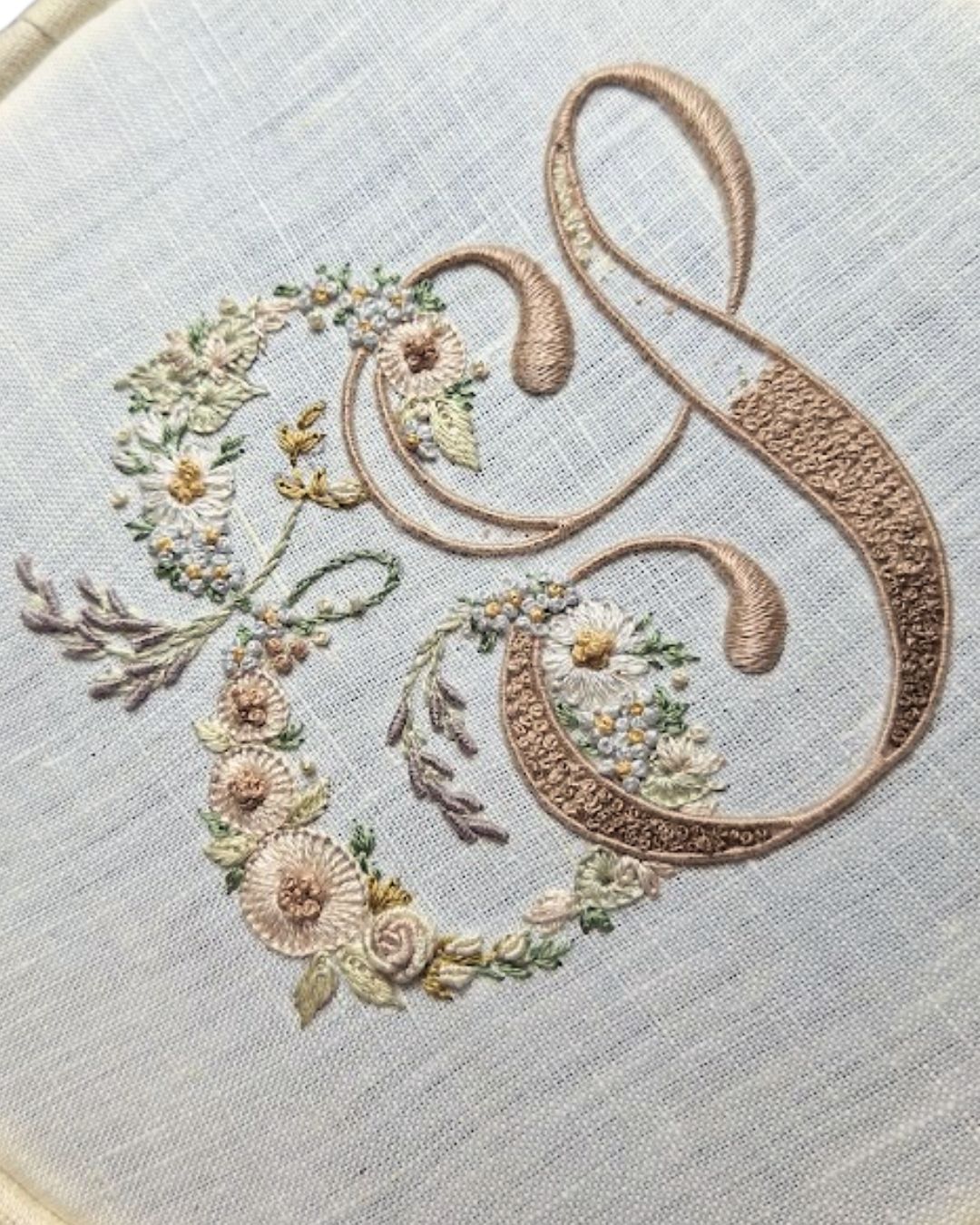
Perhaps thanks to the summer spent embroidering beaches with knots, as I was about to fill the empty spaces of my S with knots, I felt like experimenting with a colour gradient and took out the 842 colours, from lightest to darkest: DMC 712, 543, 842, 841 and 840. I started with the darkest, to fill the bottom of the letter, with the aim of having the darkest colours on the ground and the lightest in the sky. In hindsight, I have two observations to make… The first is that the 840 (the darkest) stands out a little too much from the next one. I only really realised this after ironing the piece. The second is that, overall, there are too many knots: knots belong on a flowery letter! It would have been better to use only a full stitch, or a paint stitch filling, which would have given the S its own light and separated it from the E. Worth trying, in fact…
Leave A Comment